

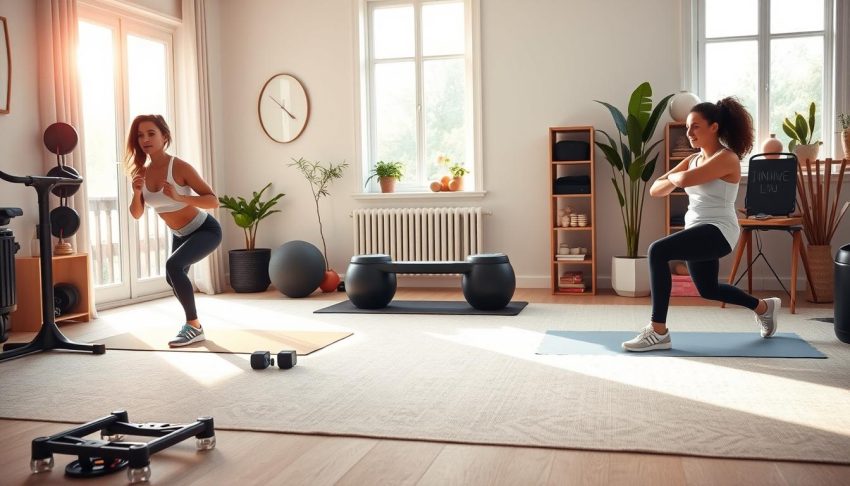
Starting a fitness journey can be intimidating, but exercising at home makes it more accessible. With home workouts for beginners, you can create a routine that suits your lifestyle and comfort level.
Exercising at home offers numerous benefits, including convenience, cost-effectiveness, and the ability to work out in a comfortable environment. Beginner workout routines can be tailored to individual needs, helping you progress at your own pace.
Key Takeaways
- Home workouts offer convenience and flexibility.
- Beginner-friendly exercises can be done in the comfort of your own home.
- Creating a routine helps you stay on track with your fitness goals.
- Exercising at home is cost-effective.
- You can progress at your own pace with beginner workout routines.
Getting Started with Home Workouts
As a beginner, getting started with home workouts can seem daunting, but with the right approach, it’s achievable. Home workouts offer a flexible and comfortable environment to start your fitness journey.
Why Home Workouts Are Perfect for Beginners
Home workouts are ideal for beginners because they eliminate the need to visit a gym, saving time and reducing intimidation. You can exercise in the comfort of your own space, at any time that suits you. Beginner exercises can be just as effective when done at home, with the right guidance and routine.
Setting Realistic Fitness Goals
Setting achievable fitness goals is crucial for maintaining motivation. Start by defining what you want to accomplish, whether it’s improving overall health, increasing strength, or enhancing endurance. Break down larger goals into smaller, manageable milestones to track your progress.
Creating a Dedicated Workout Space
Having a dedicated space for fitness at home can significantly enhance your workout experience. Identify a quiet, clutter-free area where you can exercise without distractions. Ensure it’s well-ventilated and has enough space to move around comfortably.
By following these steps, you can create an effective home workout routine that suits your lifestyle and goals.
Benefits of Home Workouts for Beginners
The benefits of working out at home are particularly appealing to beginners who are just starting their fitness journey. At-home fitness provides an environment that is both comfortable and accessible, allowing individuals to start their workout plans for beginners without feeling intimidated.
One of the primary advantages is convenience and time efficiency. Home workouts eliminate the need to commute to a gym, making it easier to fit exercise into a busy schedule. This flexibility is crucial for beginners who are still adjusting to incorporating physical activity into their daily routine.
Convenience and Time Efficiency
With at-home workouts, you can exercise at any time that suits you, whether it’s early in the morning or late in the evening. This flexibility helps in maintaining consistency, a key factor in achieving fitness goals.
Cost-Effectiveness Compared to Gym Memberships
Another significant benefit is cost-effectiveness. Home workouts reduce the need for expensive gym memberships or specialized equipment, making fitness more accessible to everyone. Beginners can start with bodyweight exercises or invest in affordable, versatile equipment.
Privacy to Build Confidence
Exercising at home also provides privacy, allowing beginners to build confidence in their abilities without feeling self-conscious. This privacy can be a significant motivator, helping individuals to progress in their fitness journey at their own pace.
- Flexibility in scheduling workouts
- Cost savings on gym memberships
- A private environment to build confidence
By leveraging these benefits, beginners can set themselves up for success in their fitness journey, making at-home workouts an attractive option for those new to exercise.
Essential Equipment for Beginner Home Workouts
For beginners, the thought of investing in workout equipment can be daunting. However, the good news is that you don’t necessarily need to break the bank to start a effective home workout routine.
No-Equipment Workout Options
One of the best things about home workouts is that you can get started with little to no equipment. Bodyweight exercises such as push-ups, squats, and lunges are excellent for building strength and endurance. You can also incorporate high-intensity interval training (HIIT) for a cardio boost without any equipment.
Basic Affordable Equipment Worth Investing In
If you’re looking to add some variety to your workouts, there are several affordable equipment options available. Resistance bands are inexpensive, lightweight, and versatile, making them perfect for strength training. A good quality yoga mat is also a worthwhile investment for comfort and grip during floor exercises.
Using Household Items as Workout Equipment
Creativity can go a long way in home workouts. You can use common household items as workout equipment. For example, water bottles can be used as dumbbells, and a sturdy chair can be used for support during squats or lunges. This approach not only saves money but also adds variety to your workout routine.
By exploring these options, beginners can create a well-rounded home workout routine that is both effective and budget-friendly.
Best Workouts for Beginners at Home
Beginners can kick-start their fitness journey with simple yet effective workouts from the comfort of their own homes. The key is to start with routines that are both manageable and enjoyable, ensuring a strong foundation for a long-term fitness habit.
Bodyweight Circuit Training for Total Beginners
Bodyweight circuit training is an excellent way for beginners to get started with working out at home. It involves performing a series of exercises in succession with minimal rest in between, providing a full-body workout. Examples include squats, push-ups, lunges, and planks.
Low-Impact Cardio Routines
Low-impact cardio exercises are perfect for those who are just starting out or have certain mobility issues. These routines can include jogging in place, jumping jacks, or following along with low-impact dance workout videos. They are effective for improving cardiovascular health without putting excessive strain on the joints.
Simple Strength Training Movements
Strength training is crucial for building muscle and boosting metabolism. Beginners can start with simple bodyweight exercises like squats, lunges, and push-ups. As they become more comfortable, they can progress to using light weights or resistance bands.
Flexibility and Mobility Exercises
Flexibility and mobility exercises are often overlooked but are essential for maintaining a full range of motion and preventing injuries. Simple stretching exercises, yoga, or Pilates can be done at home to improve flexibility. Examples include hamstring stretches, shoulder rolls, and hip openers.
To illustrate a sample workout routine, here’s a simple table that combines some of these exercises:
| Exercise | Repetitions | Sets |
|---|---|---|
| Bodyweight Squats | 10-12 | 3 |
| Push-Ups (modified on knees if necessary) | 8-10 | 3 |
| Lunges | 10-12 (per leg) | 3 |
| Plank Hold | 30-60 seconds | 3 |
By incorporating these exercises into a regular routine, beginners can make significant progress in their fitness journey. Remember, consistency is key, and it’s essential to listen to your body and progress at your own pace.
10-Minute Beginner Workout Routines
You don’t need a lot of time to get started with fitness; our beginner-friendly 10-minute workout routines can fit into even the busiest of schedules. These quick and effective workouts are designed to help beginners achieve their fitness goals without feeling overwhelmed.
Morning Energy Boost Workout Plan
Starting your day with a 10-minute workout can be incredibly beneficial. It can boost your energy levels and set a positive tone for the day. A simple morning routine could include:
- Jumping jacks: 30 seconds
- Bodyweight squats: 15 reps
- Push-ups: 10 reps
- Plank: 30 seconds
- Quick jog in place: 1 minute
Repeat this circuit twice for a full 10-minute workout.
Lunch Break Quick Fitness Routine
A quick workout during your lunch break can be a great way to refresh and recharge. Here’s a simple routine:
- Marching in place: 1 minute
- Chair squats: 15 reps
- Wall push-ups: 10 reps
- Leg raises: 15 reps per leg
- Desk push-ups: 10 reps
This routine can be completed in under 10 minutes and requires minimal space.
Evening Stress-Relief Exercise Sequence
Exercising in the evening can help relieve stress and prepare your body for a restful night’s sleep. Consider this sequence:
- Deep breathing exercises: 2 minutes
- Gentle yoga stretches: 4 minutes
- Light cardio (jogging in place, etc.): 2 minutes
- Cool-down stretches: 2 minutes
As noted by fitness expert,
“Exercise is a celebration of what your body can do, not a punishment for what you ate.”
Incorporating these 10-minute workout routines into your daily schedule can have a significant impact on your overall fitness and well-being.
| Time of Day | Workout Routine | Benefits |
|---|---|---|
| Morning | Jumping jacks, bodyweight squats, push-ups, plank, jog in place | Boosts energy, sets a positive tone for the day |
| Lunch Break | Marching in place, chair squats, wall push-ups, leg raises, desk push-ups | Refreshes and recharges |
| Evening | Deep breathing, gentle yoga stretches, light cardio, cool-down stretches | Relieves stress, prepares for restful sleep |
Full-Body Workout Plan for Beginners
Embarking on a fitness journey can be intimidating, but with a well-structured full-body workout plan, beginners can set themselves up for success. A comprehensive routine that includes a dynamic warm-up, core-strengthening exercises, and upper and lower body movements can help achieve a balanced level of fitness.
5-Minute Dynamic Warm-Up Sequence
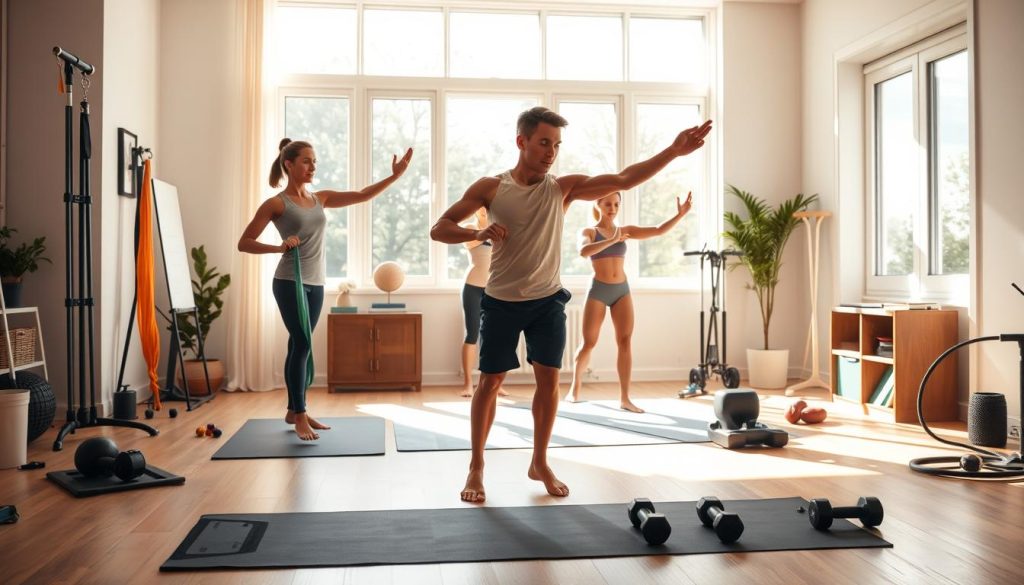
Before diving into any workout, it’s essential to prepare your muscles with a dynamic warm-up. This 5-minute sequence can include leg swings, arm circles, and light jogging in place. These movements increase blood flow and reduce the risk of injury.
Core-Strengthening Exercise Circuit
A strong core is vital for overall stability and balance. Beginners can start with simple exercises like planks, Russian twists, and leg raises. These movements target the abdominal muscles and help improve posture.
Upper and Lower Body Movement Patterns
Incorporating exercises that work both the upper and lower body ensures a well-rounded workout. Bodyweight squats and push-ups are excellent for building strength in the legs and upper body. For those who need modification, chair squats and wall push-ups are great alternatives.
Essential Cool-Down Stretches
After completing the workout, it’s crucial to cool down with some gentle stretches. Focus on hamstring stretches, chest opens, and quad stretches to help your body recover and improve flexibility.
Beginner-Friendly Cardio Workouts
For those new to exercise, starting with low-impact cardio workouts at home can be a great way to build a habit and improve overall health. These exercises are designed to be easy on the joints while still providing an effective cardiovascular workout.
Walking and Jogging in Place Routines
One of the simplest forms of cardio is walking or jogging in place. This exercise requires no equipment and can be done in the comfort of your living room. To make it more engaging, you can add arm movements or incorporate high knees.
Low-Impact Jumping Exercises
Low-impact jumping exercises, such as step-touches or small hops, are another great option for beginners. These movements help improve cardiovascular fitness without putting excessive strain on your joints.
Beginner HIIT: 20 Seconds On, 40 Seconds Off
High-Intensity Interval Training (HIIT) is a highly effective way to improve cardiovascular fitness. For beginners, starting with a 20 seconds on, 40 seconds off pattern can be a great introduction to HIIT. This involves short bursts of intense exercise followed by longer periods of rest.
| Exercise | Duration | Intensity |
|---|---|---|
| Walking/Jogging in Place | 10-15 minutes | Low-Moderate |
| Low-Impact Jumping | 10-15 minutes | Moderate |
| HIIT (20s on, 40s off) | 15-20 minutes | High |
These beginner-friendly cardio workouts can be adapted to fit your schedule and fitness level, making it easier to stick to a fitness at home routine. By incorporating these exercises into your weekly schedule, you’ll be on your way to improving your cardiovascular health and overall fitness.
Simple Strength Training for Beginners
Embarking on a strength training journey as a beginner can be made easier with the right guidance and exercises tailored for home workouts. Simple strength training exercises are designed to be beginner-friendly, requiring minimal to no equipment, and can significantly improve overall fitness.
Proper Form for Bodyweight Squats and Lunges
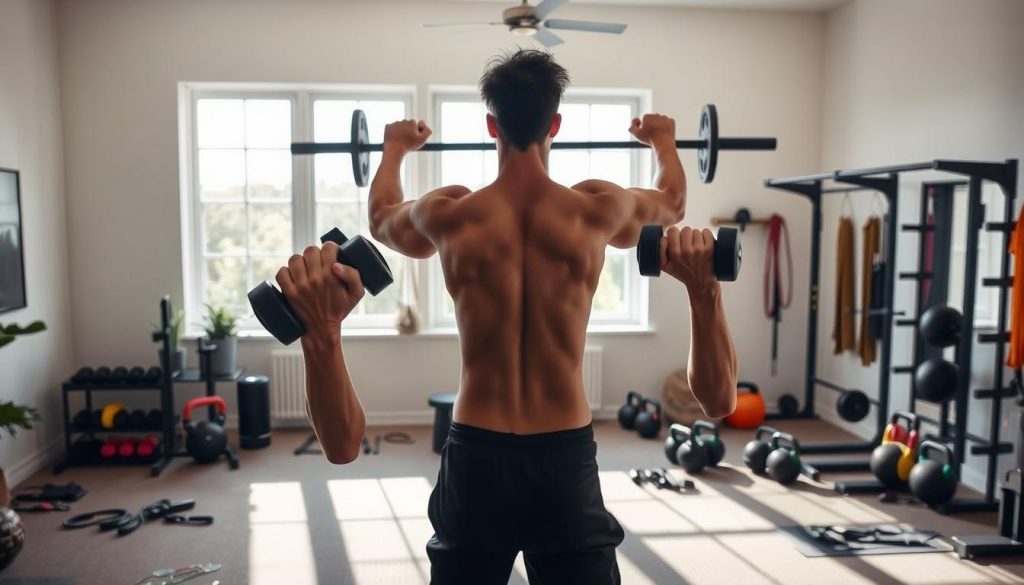
Bodyweight squats and lunges are foundational exercises that help build lower body strength. To perform a squat, stand with your feet shoulder-width apart, then lower your body down until your thighs are parallel to the ground. For lunges, step out with one foot and lower your body until your back knee almost touches the ground. Proper form is crucial to avoid injury and ensure effectiveness.
Wall Push-Ups and Chair-Assisted Movements
For those who struggle with traditional push-ups, wall push-ups are a great alternative. Stand with your feet shoulder-width apart and your hands on the wall at shoulder height. Slowly lower your body toward the wall, then push back. Chair-assisted movements, like chair dips for triceps, can also be modified to suit beginner fitness levels.
Core Exercises for Stability and Strength
Core exercises are vital for stability and overall strength. Simple exercises like planks and bicycle crunches can be done at home. To perform a plank, start in a push-up position with your body in a straight line from head to heels. Hold this position for as long as you can maintain proper form.
Using Resistance Bands for Beginners
Resistance bands are lightweight, inexpensive, and versatile, making them perfect for beginners. They can be used to add resistance to various exercises, enhancing strength training without the need for heavy weights.
| Exercise | Repetitions | Sets |
|---|---|---|
| Bodyweight Squats | 10-12 | 3 |
| Wall Push-Ups | 10-15 | 3 |
| Plank | Holding Time | 3 |
By incorporating these beginner-friendly exercises into your routine, you’ll be on your way to building strength and improving your overall fitness. Remember, consistency and proper form are key to seeing progress and avoiding injury.
Creating a Weekly Workout Schedule
For those new to at-home fitness, creating a weekly workout schedule can seem daunting, but it’s a key step towards success. A well-planned schedule helps in balancing different types of workouts, ensures adequate rest and recovery, and paves the way for progressive overload, which is crucial for making gains as a beginner.
Balancing Different Workout Types Throughout the Week
A balanced workout routine includes a mix of cardio, strength training, and flexibility exercises. For beginners, it’s advisable to start with 2-3 days of workout per week and gradually increase the frequency as the body adapts. For example, one could do cardio on Monday and Thursday, strength training on Tuesday and Friday, and dedicate Wednesday to flexibility and stretching.
| Day | Workout Type | Example Exercises |
|---|---|---|
| Monday | Cardio | Jogging in place, jumping jacks |
| Tuesday | Strength Training | Bodyweight squats, push-ups |
| Wednesday | Flexibility | Yoga, stretching exercises |
Importance of Rest and Recovery Days
Rest and recovery are just as important as the workout itself. Adequate rest allows the muscles to recover and rebuild, making them stronger over time. Beginners should ensure they have at least one or two rest days per week, where they avoid any strenuous activity.
How to Progress Safely as a Beginner
Progressing safely involves gradually increasing the intensity and volume of workouts. Beginners can achieve this by adding more repetitions, sets, or slightly increasing the difficulty of exercises. It’s also crucial to listen to the body and not push too hard, too fast, to avoid injury.
Common Mistakes Beginners Should Avoid
As you start your home workout journey, it’s crucial to be aware of the common pitfalls that can hinder your progress. Beginners often make mistakes that can lead to frustration, injury, or even cause them to give up on their fitness goals altogether.
Signs of Overtraining and How to Prevent Injuries
Overtraining is a common mistake that can result in fatigue, decreased performance, and increased risk of injury. To avoid this, listen to your body and include rest days in your workout schedule. Pay attention to signs like persistent muscle soreness, changes in mood, or decreased motivation, as these can indicate that you’re overdoing it.
Correcting Form and Technique Issues
Proper form is essential for effective and safe workouts. Poor technique can lead to injuries and reduce the effectiveness of your exercises. To correct form issues, consider consulting online resources or fitness professionals who can guide you on proper technique.
Managing Expectations and Staying Motivated
Setting realistic goals and celebrating small achievements can help keep you motivated. Be patient with your progress, as fitness is a journey that takes time. Avoid comparing yourself to others, and focus on your own improvements.
When to Seek Professional Guidance
If you’re unsure about your form, experiencing persistent pain, or not seeing progress, it might be time to seek guidance from a fitness professional. They can provide personalized advice and help you adjust your routine for better results.
Conclusion
Embarking on a fitness journey can be intimidating, but with the right guidance, you can achieve your goals from the comfort of your home. The best workouts for beginners at home are designed to be simple, effective, and easy to follow.
By incorporating beginner exercise routines into your daily schedule, you can improve your overall health and well-being. Remember to start slow, be consistent, and gradually increase the intensity of your workouts as you progress.
With a dedicated workout space and a well-planned routine, you’ll be on your way to achieving your fitness goals. Stay motivated, track your progress, and celebrate your successes along the way. The best workouts for beginners at home are just the beginning of your fitness journey.