

Incorporating dumbbells into your fitness routine can be a game-changer for those looking to maximize their workout efficiency.
Dumbbells are a versatile and effective tool for building strength and fitness across the entire body. They allow for a variety of exercises that can be adapted to any fitness level, from beginners to advanced athletes.
By incorporating dumbbell training into your regimen, you can build muscle and improve functional movement. Effective full-body routines can be structured to target multiple muscle groups in a single session, making dumbbells ideal for both home and gym workouts.
Key Takeaways
- Maximize your workout efficiency with dumbbell exercises.
- Dumbbells are versatile and effective for building total-body strength.
- Adapt dumbbell workouts to your fitness level.
- Improve muscle development and functional movement.
- Structure effective full-body routines with dumbbells.
The Power of Dumbbell Training
Dumbbell training has revolutionized the way we approach fitness, offering a versatile and effective method for achieving strength and muscle gains.
Why Dumbbells Are Effective Training Tools
Dumbbells are effective training tools because they increase stabilization and muscle activation, recruiting more muscle fibers. They are also generally safer to use when training alone, as they don’t require a spotter like some other weights. Additionally, dumbbells force limbs to work unilaterally, helping to identify and correct weaknesses.
Benefits of Full Body Dumbbell Workouts
Full body workouts with dumbbells offer numerous benefits, including:
- Time-efficient, targeting multiple muscle groups in a single session
- Elevating heart rate for cardiovascular benefits alongside strength gains
- Promoting balanced muscle development and reducing the risk of overtraining
- Boosting metabolic rate for enhanced fat loss while preserving muscle mass
- Improving core stability and back strength, leading to better posture and reduced injury risk

Essential Equipment for Dumbbell Workouts
When it comes to dumbbell workouts, having the right equipment is crucial for an effective and safe exercise routine.
Choosing the Right Dumbbells
Selecting the appropriate dumbbells is vital. Adjustable dumbbells are particularly useful as they offer versatility and space-saving benefits for your workout.
Are Adjustable Dumbbells Worth It?
Adjustable dumbbells are a worthwhile investment for home gyms. They offer several benefits, including:
- Significant space-saving by replacing multiple weights pairs
- Efficient workout with quick weight changes
- Long-term cost-effectiveness
- Secure locking mechanisms for safety when held in hand
If you’re struggling to use your gym membership and lack space, then adjustable dumbbell is worth considering.
Proper Form and Safety Guidelines
When engaging in dumbbell training, it’s crucial to prioritize proper form and safety guidelines to maximize your workout’s effectiveness and minimize the risk of injury. This involves being mindful of your body positioning and movement during exercises.
Common Mistakes to Avoid
One of the key aspects of safe dumbbell training is avoiding common mistakes that can lead to injuries. These include using too much weight, not warming up adequately, and neglecting to engage your core during exercises. Pay particular attention to your shoulders, arms, and back, as these areas are prone to strain.
Warming Up Before Dumbbell Training
A proper warm-up is essential before starting any dumbbell workout. Begin with 5-10 minutes of light cardio to increase blood flow to your muscles and enhance joint mobility. Include dynamic stretches that mimic the movements you’ll perform, and consider activation exercises for underactive muscles like the glutes and core. A thorough warm-up can significantly improve performance and reduce injury risk.
Full Body Exercises with Dumbbells: The Fundamentals
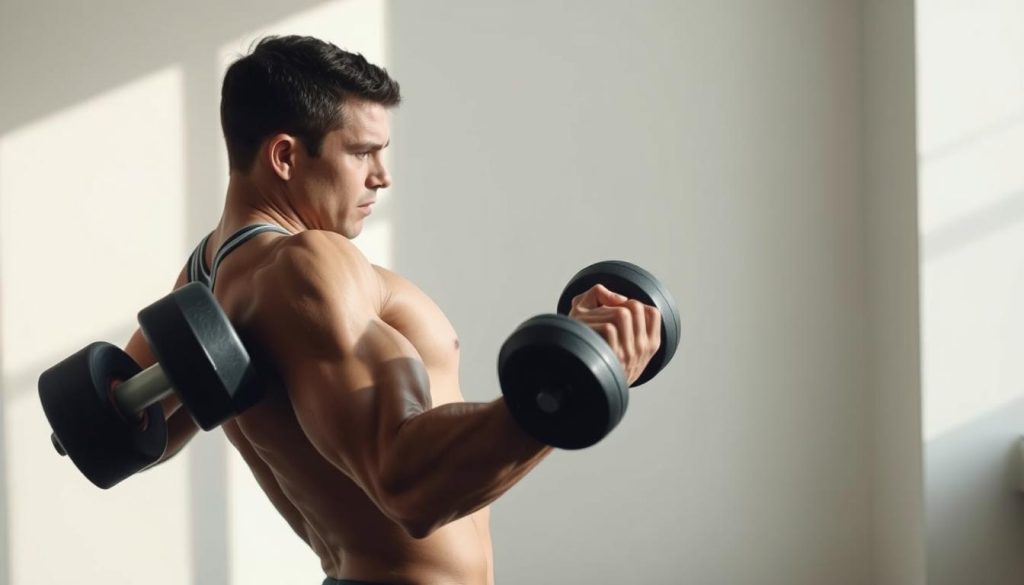
To get the most out of your dumbbell workout, it’s essential to understand the fundamentals of full-body exercises. Full-body exercises with dumbbells are a great way to improve overall strength and muscle mass. By mastering the basics, you can create a solid foundation for your training program.
Understanding Movement Patterns
Understanding movement patterns is crucial for effective dumbbell training. This involves recognizing how different exercises target specific muscle groups and how to adjust your position to maximize the effect. By mastering movement patterns, you can ensure that you’re working out efficiently and safely.
How to Progress Your Dumbbell Training
To continue making progress in your dumbbell training, it’s essential to incorporate strategies like progressive overload, tempo training, and periodization. This can involve gradually increasing the weights you lift, controlling the eccentric phase of movements, and cycling between phases focused on strength, hypertrophy, and endurance. By systematically tracking your progress and adjusting your training program, you can avoid plateaus and achieve your fitness goals.
Upper Body Dumbbell Exercises
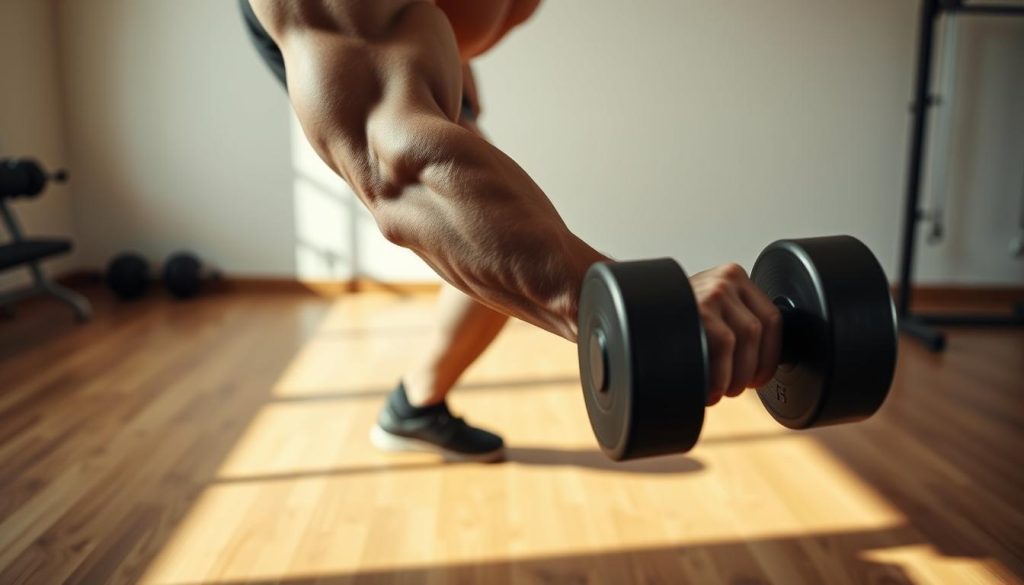
Dumbbell exercises targeting the upper body can significantly enhance overall muscle development. These exercises work multiple muscle groups simultaneously, ensuring a balanced workout.
Chest Exercises
The chest muscles are a crucial part of the upper body. Dumbbell chest presses and flys are effective exercises for building the pecs. These exercises allow for a full range of motion, engaging the muscle from different positions.
Back Exercises
Building a strong back is essential for overall upper body strength. Dumbbell rows are a key exercise, targeting the muscle groups in the back and arms. They help improve posture and enhance athletic performance.
Shoulder Exercises
Shoulder development is critical for a balanced upper body. Exercises like the overhead press and lateral raises effectively target the shoulders, improving overall muscle mass and strength in the arms.
Lower Body Dumbbell Exercises
Lower body dumbbell exercises offer a comprehensive workout for your legs, glutes, and hips, enhancing overall lower body strength. These exercises are crucial for improving muscle tone, balance, and overall athletic performance.
Quadriceps and Glute Exercises
Dumbbell exercises like Romanian deadlifts and single-leg deadlifts are effective for targeting the glutes and legs. Romanian deadlifts, in particular, strengthen the posterior chain, including the glutes and lower back, while single-leg deadlifts challenge balance and intensify the work on each leg independently.
Hamstring and Calf Exercises
Exercises such as good mornings with dumbbells and standing calf raises target the hamstrings and calf muscles. Good mornings work similarly to Romanian deadlifts but with a different loading pattern, while standing calf raises build the gastrocnemius muscle for defined calves and improved ankle strength. It’s essential to hinge at the hips rather than rounding the lower back to prevent injury, keeping your feet firmly on the floor.
Core-Strengthening Dumbbell Exercises
Incorporating core-strengthening dumbbell exercises into your routine can improve overall stability. A strong core is essential for maintaining proper form during various workouts, and dumbbells can be used to effectively target the core muscles.
Rotational Exercises
Rotational exercises with dumbbells challenge the core muscles, particularly the obliques. Examples include Renegade rows, which combine a plank position with rowing motion to challenge anti-rotational core stability, and Plank pull-throughs, which force the core to resist rotation while moving a weight from one side of the body to the other.
Stabilization Exercises
Stabilization exercises, such as Farmer’s walks with dumbbells, create tremendous core engagement as the body works to stabilize against the load. Other examples include Dumbbell dead bugs and Hollow holds with a dumbbell, which increase the challenge to the deep core muscles that support proper posture.
These exercises should be performed with controlled breathing and proper bracing techniques to maximize their effectiveness. By incorporating these core-strengthening dumbbell exercises into your routine, you can improve overall core stability and enhance your performance in other exercises.
Compound Dumbbell Movements
To take your fitness routine to the next level, incorporating compound dumbbell movements is essential. These exercises work multiple muscle groups simultaneously, providing an efficient and effective workout. By engaging various parts of your body, such as your legs, arms, back, shoulders, and chest, you can achieve a full-body workout with just a few exercises.
Multi-Joint Exercises for Maximum Efficiency
Multi-joint exercises are a cornerstone of effective strength training. They involve movements that work multiple joints and muscle groups at once, such as the squat to overhead press or the lunge with bicep curl. These exercises not only build strength but also improve coordination and balance. As noted by fitness experts, “Compound exercises are the most efficient way to build overall muscle mass and strength.”
Combining Upper and Lower Body Movements
Combining upper and lower body movements with dumbbells can enhance the effectiveness of your workout. Exercises like the deadlift with row or step-up with shoulder press challenge your entire body, engaging your upper back, shoulders, triceps, biceps, forearms, abs, glutes, hamstrings, quads, adductors, abductors, and calf muscles. As “The more you can engage multiple muscle groups at once, the more efficient your workout will be.” By incorporating these compound movements into your routine, you can achieve a more balanced and efficient workout, targeting multiple muscle groups and improving overall fitness.
Dumbbell HIIT Workouts
Dumbbell HIIT workouts offer a versatile and effective way to improve cardiovascular health and strength. By incorporating dumbbells into your High-Intensity Interval Training, you can add resistance to your workouts, making them more challenging and rewarding.
Structuring High-Intensity Intervals
To structure your HIIT workout, choose a series of exercises and perform each one for 40 seconds followed by 20 seconds of rest. Complete 3-4 rounds of the circuit. Adjust the weight of your dumbbells based on the exercise, using heavier weights for lower body movements and lighter weights for more complex or endurance-based exercises.
Sample HIIT Routines with Dumbbells
Here are some sample HIIT routines you can try:
- A full-body HIIT circuit including dumbbell squat to press, renegade rows, dumbbell swing, push-up to dumbbell drag, and mountain climbers.
- An upper body focus routine with dumbbell push press, bent-over rows, floor press, upright rows, and plank shoulder taps.
- A lower body emphasis routine featuring goblet squats, dumbbell lunges, Romanian deadlifts, lateral lunges, and squat jumps.
Remember to include a thorough warm-up and cool-down to prepare your body for the intense effort and facilitate recovery. These workouts can be scaled by adjusting work/rest intervals, number of rounds, or exercise complexity.
3-Day Full Body Dumbbell Workout Plan
To maximize the effectiveness of your dumbbell training, consider a 3-day full body workout plan. This structured approach ensures that you target different muscle groups, promoting overall fitness and strength.
Day1: Push Focus
On Day1, focus on push exercises such as dumbbell presses and shoulder presses. Perform dumbbell chest presses (3 sets of 8-12 reps) and dumbbell shoulder presses (3 sets of 10-15 reps) to engage your chest and shoulder muscles.
Day2: Pull Focus
Day2 is dedicated to pull exercises. Include dumbbell rows (3 sets of 8-12 reps) and dumbbell bicep curls (3 sets of 10-15 reps) to target your back and biceps.
Day3: Legs and Core Focus
Day3 prioritizes lower body strength and core stability. Begin with goblet squats (3-4 sets of 10-15 reps) and include walking lunges or split squats (3 sets of 10-12 reps per leg). Perform Romanian deadlifts or good mornings (3 sets of 10-12 reps) to target your hamstrings and glutes.
Single Dumbbell Workout Options
Single dumbbell exercises offer a versatile and efficient method for a full-body workout. This approach not only simplifies your training by requiring less equipment but also challenges your body in new ways, enhancing overall strength and coordination.
Effective Exercises with One Dumbbell
When using a single dumbbell, it’s essential to focus on exercises that engage multiple muscle groups and promote balance. Effective exercises include goblet squats, single-arm rows, and single-arm overhead presses. These movements help in developing strength, improving muscle imbalances, and enhancing core stability.
Sample Single Dumbbell Circuit
A sample circuit could involve:
- Starting with goblet squats (15 reps) to warm up your lower body.
- Moving to alternating reverse lunges (10 reps per side) while holding the dumbbell at your chest.
- Performing single-arm overhead presses (8-10 reps per side) to target your shoulders and core.
- Continuing with single-arm rows (10-12 reps per side) to balance pushing with pulling movements.
- Adding Russian twists (15 reps per side) to target rotational core strength.
- Finishing with dumbbell swings (15 reps) for an explosive posterior chain exercise.
Perform this circuit with minimal rest between exercises and 1-2 minutes between rounds for 3-4 total rounds. This efficient circuit can be completed in 15-20 minutes and targets all major muscle groups, making it an ideal option for those looking for a comprehensive and time-effective workout.
Dumbbell Exercises for Beginners
For those new to dumbbell training, starting with the basics is crucial for a safe and effective workout routine. Understanding the proper starting position and form is essential.
Starting with Basic Movements
Begin with simple movement patterns, using weights that allow you to maintain proper form. Basic exercises like bicep curls and shoulder presses are great starting points.
Progression Plan for Newcomers
To progress in your training, follow this plan:
- Week 1-2: Master form with lighter weights, performing 2-3 sets of 12-15 reps.
- Week 3-4: Increase weight slightly, aiming for 3 sets of 10-12 reps.
- Week 5-6: Introduce more complex movements like lunges.
- Week 7-8: Incorporate supersets to increase workout density.
Always prioritizeformover increasingweights. Consider working with a qualified trainer to establish proper techniques.
Advanced Dumbbell Training Techniques
To take your dumbbell training to the next level, consider incorporating advanced techniques that challenge your muscles and enhance overall fitness.
Drop Sets and Supersets
Drop sets and supersets are effective methods for increasing the intensity of your workout. By performing a set to failure, then reducing the weight and continuing, you can significantly fatigue your arms and shoulders. Supersets involve performing two exercises back-to-back without rest, further challenging your muscle groups.
Time Under Tension Methods
Time under tension (TUT) refers to how long your muscles are working during a set, a crucial factor for muscle growth. Implement tempo training by controlling each phase of the movement—for example, using a 4-seconds down, 1 second pause, 2 seconds up tempo. Slow eccentric phases increase muscle damage and subsequent growth while improving control. Isometric holds at challenging points in the range of motion increase motor unit recruitment and strength.
By combining these methods with appropriate weight selection, you’ll typically need to reduce weight when increasing TUT. These advanced training techniques should be incorporated gradually after establishing a solid foundation of strength and proper form.
Nutrition to Support Your Dumbbell Training
Proper nutrition is the backbone of a successful dumbbell training regimen, enhancing strength and recovery. A well-balanced diet supports your fitness goals and ensures you’re getting the most out of your workout routine.
Pre and Post-Workout Nutrition
Consuming the right nutrients before and after your training sessions is crucial. Pre-workout, focus on a mix of carbohydrates and protein to fuel your session. Post-workout, prioritize protein to aid in muscle recovery and carbohydrates to replenish energy stores.
Hydration and Recovery
Staying hydrated is essential for optimal performance, as even mild dehydration can impact your body‘s ability to perform. Aim to drink at least half your body weight in ounces of water daily. Additionally, incorporating active recovery techniques such as light walking or yoga can enhance blood flow to muscle and accelerate recovery.
Tracking Progress in Your Dumbbell Workouts
To get the most out of your dumbbell workouts, tracking progress is crucial. Monitoring your advancements helps you stay motivated and adjust your training regimen as needed.
Setting Measurable Goals
Setting clear, measurable goals is the foundation of tracking progress. Define your objectives, whether it’s increasing strength, enhancing endurance, or improving overall fitness. Use specific metrics such as the amount of weight lifted or the number of reps performed.
When to Increase Weight or Reps
Progressive overload is key to continuous improvement. To apply it effectively, follow the “2-for-2” rule: when you can perform two additional reps beyond your target for two consecutive workouts, it’s time to increase the weight. For strength goals, increase the weight by 5-10% and adjust reps accordingly. For endurance, first increase reps before adding weight. Always prioritize proper form and consider microloading for upper body exercises.
Conclusion: Building a Sustainable Dumbbell Routine
With dumbbells, you can create a sustainable workout routine that adapts to your evolving fitness journey. Full body exercises with dumbbells offer an efficient and effective approach to fitness that can be sustained long-term. The versatility of dumbbell training allows for continuous progression and variety, preventing plateaus and boredom.
Consistency is key; a sustainable routine you can maintain regularly yields better results than sporadic intense sessions. It’s essential to listen to your body and adjust your dumbbell workout based on recovery, energy levels, and life stressors. Periodically reassessing your goals and adjusting your routine will help you stay on track.
Remember, rest and recovery are crucial components of any successful training program. The best dumbbell routine is one that you enjoy and can maintain as part of your lifestyle for years to come, ultimately supporting your overall body health and workout goals.