

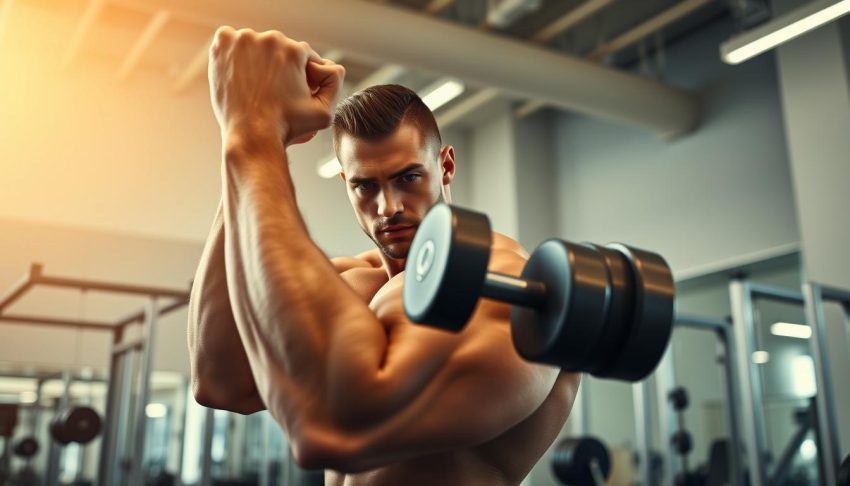
When it comes to arm exercises, the bicep curl is a classic staple in every gym-goer’s fitness routine. It’s an easy and effective way to increase bicep strength while working your shoulders and back. However, if you’re looking to get bigger arms faster, you might want to consider the hammer curl variation.
A popular alternative to standard bicep curls, hammer curls use a neutral grip position that engages different muscle fibers, leading to more balanced arm development. By incorporating hammer dumbbell curls into your workout routine, you can target your biceps and forearm muscles more effectively.
Key Takeaways
- Develop impressive arm muscles with hammer dumbbell curls.
- Engage different muscle fibers with a neutral grip position.
- Maximize muscle growth and avoid common injuries.
- Improve overall upper body development.
- Enhance your arm training routine.
What Are Hammer Dumbbell Curls?
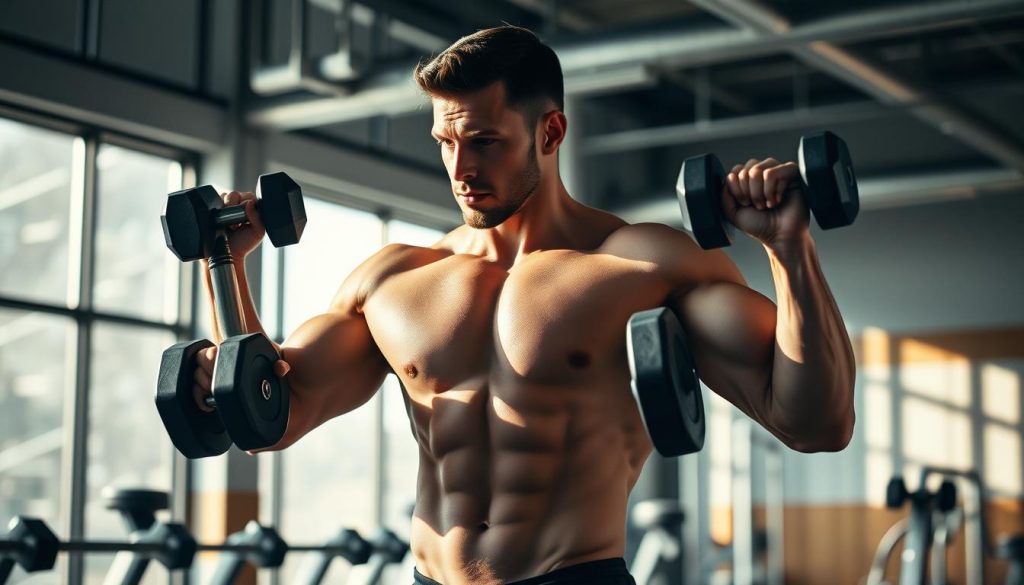
Hammer dumbbell curls are a variation of the traditional bicep curl that involves a neutral grip, where your palms face each other throughout the movement. This subtle change in grip orientation significantly alters the muscle activation during the exercise.
The Neutral Grip Difference
The neutral grip used in hammer dumbbell curls creates a different emphasis on the muscles compared to the traditional bicep curl. By keeping your palms facing each other, you shift the focus from the biceps to the brachialis and brachioradialis muscles.
How They Compare to Standard Bicep Curls
When comparing hammer curls to standard bicep curls, the main differences lie in grip orientation, muscle emphasis, and the ability to typically handle heavier weights. Understanding these differences helps you strategically incorporate both variations into your training routine for complete arm development. Hammer curls place less stress on the wrist joint, making them potentially more comfortable for those with wrist issues.
The key characteristics of hammer dumbbell curls include:
- A neutral grip where palms face each other
- Emphasis on the brachialis and brachioradialis muscles
- Reduced stress on the wrist joint
- The ability to handle heavier weights
Benefits of Hammer Dumbbell Curls
The benefits of hammer dumbbell curls extend beyond just building bigger biceps. This exercise offers a range of advantages that can enhance overall arm development.
Enhanced Brachialis Development
Hammer dumbbell curls are particularly effective at developing the brachialis, a muscle that lies beneath the biceps. As Samuel notes, “When we develop our brachialis, it’s going to really help push our biceps up and give us a nice 3D look.” This results in a fuller, more three-dimensional arm appearance.
Increased Forearm Strength
The exercise also significantly increases forearm strength and size by targeting the brachioradialis. This improvement in grip strength benefits other exercises and everyday activities.
Ability to Lift Heavier Weights
One major advantage of hammer curls is the ability to lift heavier weights compared to traditional bicep curls. The neutral grip position reduces stress on the wrists and provides mechanical advantages, leading to bigger muscles in the arms and biceps over time.

In summary, incorporating hammer dumbbell curls into your workout routine can lead to enhanced arm development, increased strength, and a more balanced physique.
Muscles Targeted by Hammer Dumbbell Curls
Understanding the muscles worked by hammer dumbbell curls is crucial for maximizing arm development. Hammer curls are particularly effective because they target multiple muscle groups simultaneously, making them a valuable addition to any upper body workout routine.
Primary Muscles: Brachialis and Biceps Brachii
The brachialis muscle, which lies underneath the biceps brachii, is a primary target of hammer dumbbell curls. Developing this muscle contributes significantly to arm thickness. The biceps brachii, particularly its outer head (long head), is also heavily engaged, contributing to the peak of the biceps when viewed from the side.
Secondary Muscles: Brachioradialis and Forearms
Secondary muscles targeted by hammer curls include the brachioradialis, a prominent muscle of the forearm that becomes visible during the exercise. The entire forearm muscle group receives substantial stimulation, including various flexors and extensors that contribute to grip strength. Additionally, stabilizing muscles in the shoulders, upper back, and core are activated to maintain proper form.
- Hammer dumbbell curls effectively target the brachialis, enhancing arm thickness.
- The biceps brachii, especially the outer head, is engaged, contributing to the biceps peak.
- The brachioradialis and forearm muscles are secondary targets, improving forearm strength and grip.
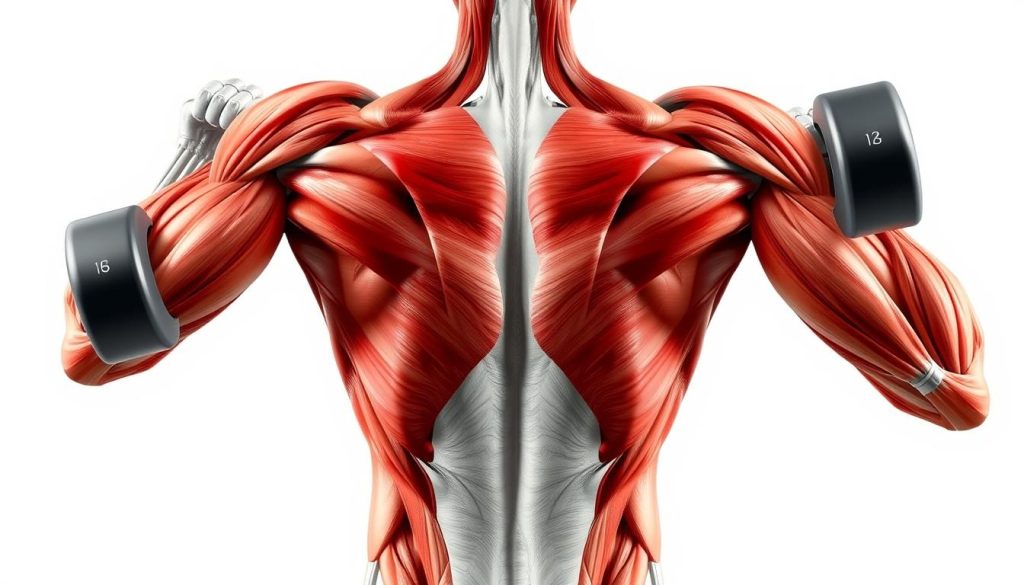
By understanding and targeting these muscle groups, individuals can optimize their workout routines for better arm development and overall upper body strength.
Proper Hammer Dumbbell Curls Form
Executing hammer dumbbell curls with proper form is vital for achieving stronger biceps. This involves understanding the correct starting position, execution technique, and how to lower the weight effectively.
Starting Position
To begin, stand holding dumbbells in your hands with a closed, neutral grip, with your palms facing your body. Position the dumbbells alongside your thighs with your elbows fully extended. Assume a split-stance position to stabilize your body, stiffen your torso by contracting your abdominal/core muscles, and depress and retract your scapulae.
Execution Technique
During the execution phase, curl the weights upward by bending at the elbows while keeping your upper arms stationary against your torso. Maintain the neutral grip with palms facing each other. Focus on a controlled movement, lifting the weight until your forearms are roughly parallel to the floor or slightly higher.
Lowering the Weight
When lowering the weight, maintain the same controlled pace and body position, fully extending your arms back to the starting position without letting the dumbbells drop quickly or losing tension in the target muscles.

Mastering Hammer Dumbbell Curls: Expert Tips
Mastering hammer dumbbell curls requires more than just lifting weights; it demands precision and control. As Eb notes, “This is a curl, but that doesn’t mean your body gets to be in anything close to a lazy position.”
Engage Your Whole Body
To truly master hammer dumbbell curls, engage your whole body by bracing your abs and squeezing your glutes. This creates a stable foundation for the movement, ensuring you can focus on curling the dumbbells effectively.
Perfect Your Grip
Perfect your grip by actively squeezing the dumbbells rather than passively holding them. This increases forearm activation and ensures the brachialis drives the movement properly.
Focus on the Squeeze
Focus on the squeeze at the top of each rep by consciously contracting your biceps and holding for a brief moment. This maximizes time under tension and enhances muscle development.
Common Mistakes to Avoid
To get the most out of hammer dumbbell curls, it’s crucial to avoid common mistakes that can hinder progress. Proper form and technique are essential for maximizing the effectiveness of this exercise.
Swinging the Weight
One of the most common mistakes is swinging the weight, using momentum from the hips or back to lift the dumbbells. This takes tension away from the target muscles, reducing the effectiveness of the exercise. To correct this, focus on squeezing your glutes and tightening your abs throughout the movement.
Moving Your Elbows Forward
Another mistake is moving your elbows forward during the curl, shifting the focus away from the biceps and brachialis. Keep your elbows firmly at your sides to maintain proper form.
Using Momentum Instead of Muscle
Using momentum instead of muscle control is counterproductive, as it prevents proper time under tension and reduces the muscle-building stimulus. Focus on controlled repetitions to get the most out of hammer curls.

Hammer Curl Variations
To keep your workout routine fresh and prevent plateaus, consider incorporating various hammer curl exercises into your fitness regimen. Adding hammer curl variations can help target your arm muscles from different angles and improve overall development.
Seated Hammer Curls
Seated hammer curls are performed while sitting on a bench with your back straight, which helps eliminate the potential for using momentum and forces stricter form for better muscle isolation. This variation allows for a more focused workout on the brachialis muscles.
Alternating Hammer Curls
Alternating hammer curls involve lifting one dumbbell at a time while the other arm remains in the starting position, allowing for greater focus on each individual arm and potentially heavier weights.
Cross-Body Hammer Curls
Cross-body hammer curls add a new dimension by curling the weight across the body toward the opposite shoulder, which increases activation of the brachialis muscle. This variation can be incorporated into your fitness routine to continuously challenge your arm muscles in different ways.
- Incorporate these hammer curl variations into your workout routine to prevent plateaus and improve overall fitness.
- Experiment with different weights, rep ranges, and tempos across these variations to find what works best for your specific goals and body type.
- Start with 3 sets of 6 to 8 reps with heavier weights than you’d use for a standard curl, or use lighter weights but more reps—say 3 to 4 sets of 15 to 20 reps.
Conclusion
Hammer dumbbell curls stand out as a superior exercise for arm development, targeting multiple muscle groups. By incorporating hammer curls into your routine, you’ll not only develop your biceps but also the brachialis and forearm muscles, creating a more balanced arm appearance. For optimal results, combine hammer curls with other curl variations like EZ bar curls. Proper form is crucial, so start with lighter weights and master the technique. Whether you’re a beginner or experienced lifter, hammer dumbbell curls are a valuable addition to your arm training arsenal.