


Developing a strong and toned midsection is a fitness goal for many, but achieving it requires more than just doing countless crunches. Your core muscles need to be challenged with resistance to grow and become stronger, just like any other muscle in your body.
According to Samuel, “Don’t be afraid to load your abs, period.” This approach is essential because a strong core enhances your overall fitness and improves your performance in other workouts. By incorporating weighted ab exercises into your routine, you can accelerate your results and break through plateaus in your ab development.
Key Takeaways
- Weighted ab exercises are crucial for building a strong and visible core.
- Resistance training is key to developing real core muscle and strength.
- A strong core improves overall fitness and enhances performance in other exercises.
- Incorporating weighted ab exercises can help break through plateaus.
- Progressive overload principles apply to core training just like any other muscle group.
Why Adding Weight to Your Ab Workouts Matters
The key to unlocking a stronger core lies in progressive overload, which can be achieved by adding weight to your ab workouts. Your core training routine needs to evolve beyond bodyweight exercises to achieve real muscle growth and strength. Whether your goal is aesthetics, performance, or both, relying solely on bodyweight exercises will only take you so far.

Progressive Overload for Core Development
Just like any other muscle group, your core benefits from progressive overload. Simply increasing the number of reps of bodyweight exercises eventually leads to diminishing returns. Adding weight to your ab workouts creates the necessary stimulus for muscle growth and strength gains. This approach aligns with the principle that muscles need to be challenged progressively to continue growing and strengthening.
Benefits Beyond Aesthetics
Weighted ab training offers benefits that extend beyond aesthetics. It helps protect your lower back by developing the stabilizing muscles around your spine, improves posture and body alignment, and enhances performance in compound movements like squats and deadlifts. By incorporating weighted ab exercises, you’re not just building stronger abs; you’re contributing to a more stable and powerful body overall.
Equipment You’ll Need for Weighted Ab Exercises
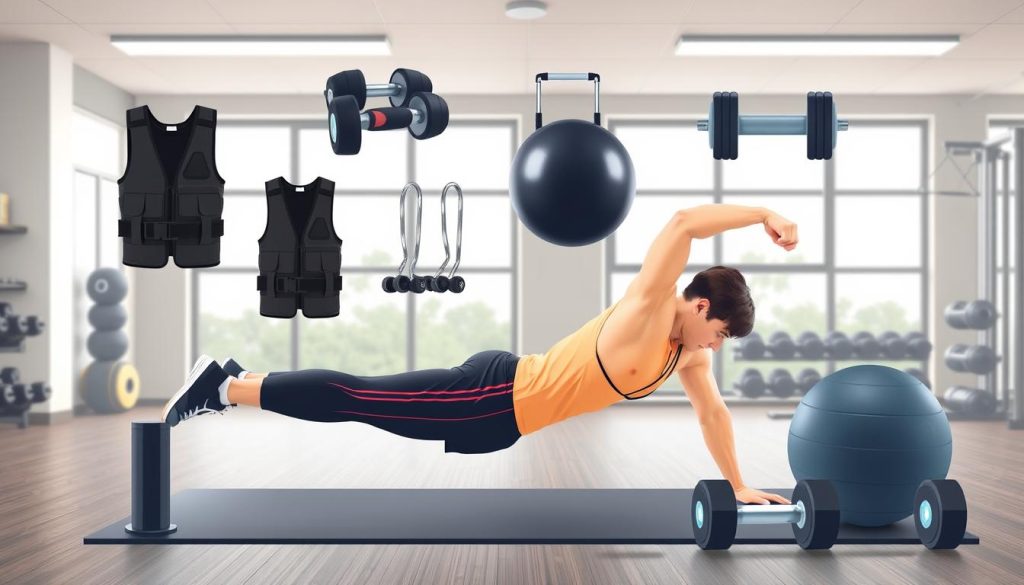
To take your ab workouts to the next level, you’ll need to incorporate some key pieces of equipment. Weighted ab exercises can be made more effective with the right gear.
Dumbbells and Kettlebells
Dumbbells and kettlebells are versatile and can be used in a variety of core exercises, adding weight and challenge to your workout. They allow for progressive overload, which is crucial for core development.
Medicine Balls and Weight Plates
Medicine balls and weight plates are ideal for rotational exercises that target the abs. They provide a secure grip and can be used dynamically.
Cable Machines and Resistance Bands
Cable machines offer constant tension throughout the range of motion, making them perfect for certain core exercises. Resistance bands are a portable alternative for home workouts, providing a similar effect.
Weighted Hollow Hold
The weighted hollow hold is a foundational exercise that teaches proper core bracing and full-body tension. This exercise is crucial for building a strong and resilient core, which is essential for overall athletic performance and stability.

How to Perform the Exercise
To perform the weighted hollow hold, start by lying on the ground with your lower back pressed firmly into the floor. Hold a light weight plate or dumbbell in both hands, with your elbows bent and wide at the sides. Lift your legs off the floor just a few inches, and extend your arms holding the weight behind your head, keeping your shoulders off the floor. Squeeze your abs and glutes to create full-body tension, ensuring your lower back remains planted on the floor.
Common Mistakes to Avoid
When performing the weighted hollow hold, it’s essential to avoid common mistakes that can reduce the exercise’s effectiveness. These include allowing your lower back to arch off the floor or letting your legs drop too low. Maintaining proper form is crucial to targeting the right muscles and protecting your lower back. By being mindful of your body position and engaging your core, you can maximize the benefits of this exercise.
- Learn how the weighted hollow hold serves as a foundational exercise that teaches proper core bracing and full-body tension.
- Understand the correct starting position with your lower back pressed firmly into the floor and legs slightly elevated.
- Master the proper hand position and weight placement to maximize the effectiveness of this challenging core exercise.
Weighted Russian Twist
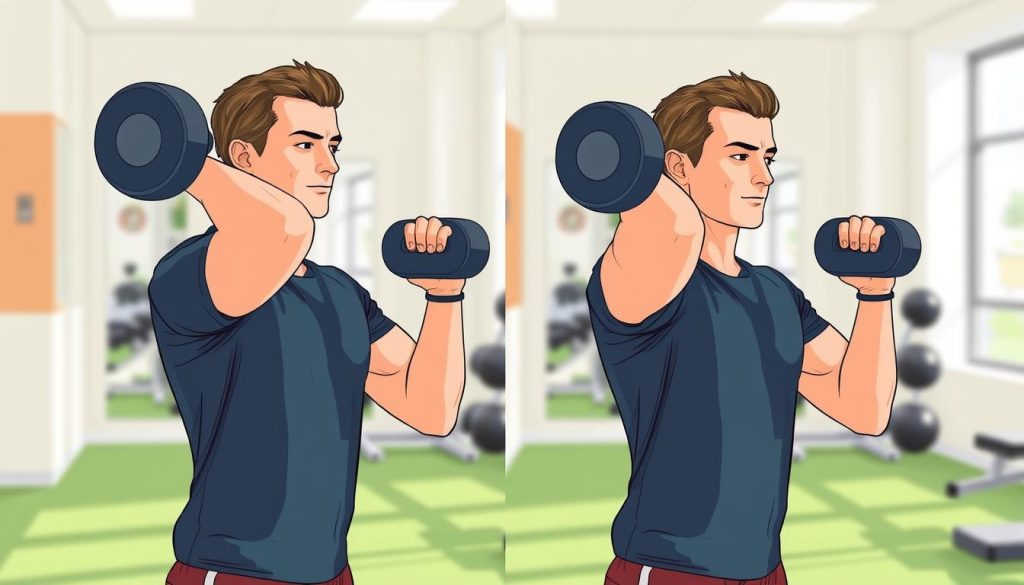
To build rotational core strength, the Weighted Russian Twist is an essential exercise. This movement targets the obliques, helping to improve overall core stability and enhance athletic performance.
Proper Form and Technique
Maintaining proper form is crucial when performing the Weighted Russian Twist. Sit on the floor with your heels on the ground, squeezing your glutes for added stability. Hold a dumbbell or kettlebell, leaning back to form a right angle between your torso and thighs. Raise your arms in front of you, keeping your gaze on your hands throughout the movement. Rotate your torso from one side to the other, pausing briefly in the middle position between reps. Move slowly and stay within your range of motion to avoid injury.
Variations for Different Fitness Levels
The Weighted Russian Twist can be modified to suit various fitness levels. Beginners can start with body weight or lighter weights, while advanced exercisers can use heavier dumbbells or kettlebells. Changing your foot position or elevation can also make the exercise easier or more challenging, allowing you to progress at your own pace.
Cable Crunch

When it comes to building strong, defined abs, the cable crunch stands out as a top exercise. This exercise is particularly effective for developing visible ab definition and hypertrophy.
Step-by-Step Instructions
To perform the cable crunch, start by setting the cable machine to the highest position. Attach a rope or handle to the cable and grasp it with both hands. Stand facing away from the machine, with your feet shoulder-width apart. Keep your hips stable and your core engaged throughout the exercise. Flex your abs to hinge at the hips, pulling your elbows down to your knees. Rotate slightly to touch your left elbow to the right knee, then repeat on the other side.
Tips for Maximum Effectiveness
To maximize the effectiveness of the cable crunch, focus on proper form and technique. Keep your lats spread wide and your torso rolling forward as you crunch. Avoid pulling with your arms; instead, contract your abs to drive the movement. Maintain constant tension on your core throughout the entire range of motion. By following these tips, you can ensure that you’re targeting your abs effectively and minimizing strain on other body parts.
Weighted Decline Crunch
One of the most effective exercises for engaging your core is the Weighted Decline Crunch. This exercise amps up the ab engagement by increasing the range of motion compared to standard crunches. By adjusting the angle of the decline bench, you can dial up or down the degree of difficulty, making it suitable for various fitness levels.
Setting Up for Success
To maximize the effectiveness of the Weighted Decline Crunch, proper setup is crucial. Start by adjusting the decline bench to a comfortable angle. Secure your legs under the provided padding to maintain stability throughout the exercise. Hold a dumbbell, medicine ball, or weight plate against your chest to add resistance.
- Adjust the decline bench according to your fitness level.
- Secure your legs to prevent movement.
- Hold the weight firmly against your chest.
Execution and Form Tips
Proper form is essential to target the abs effectively and avoid injury. Lie back on the decline bench and keep your lower back flat against the pad. Engage your core throughout the movement, and avoid using your hip flexors to lift your body. Focus on slow, controlled movements, and breathe naturally.
- Keep your lower back pressed against the bench.
- Engage your abs to lift your torso.
- Use controlled movement and proper breathing.

Pallof Press

The Pallof Press stands out among various exercises for its anti-rotation benefits, making it a valuable addition to any core strengthening routine. This exercise uniquely challenges your core to maintain stability while your arms move, engaging your entire core as a unit.
Anti-Rotation Benefits
The Pallof Press is particularly effective at training the anti-rotation function of your core, an aspect often neglected in traditional ab workouts. By resisting rotation, you strengthen the muscles that protect your lower back and improve overall core stability.
How to Perform It Correctly
To perform the Pallof Press correctly, start by setting up a cable machine or attaching a resistance band to an anchor at chest height. Kneel next to the anchor point and grasp the handle with both hands. Squeeze your glutes and core to create tension, then extend your arms away from your torso. Fight the pull of the cable by maintaining tightness in your core and glutes. Hold for a count, then return to the starting position. This exercise effectively engages your entire core, including deep stabilizing muscles.
Weighted Ab Exercises for Lower Abs
Developing strong lower abs requires targeted exercises that often involve adding weight to increase the challenge. The lower abs are a crucial part of the core, and strengthening this area can improve overall stability and athletic performance.
Two effective exercises for targeting the lower abs are Hanging Knee Raises with Weight and Weighted Leg Raises. These exercises can be modified based on your fitness level, from supported versions to full hanging variations.
Hanging Knee Raises with Weight
Hanging knee raises are a great way to target the lower abs. By adding weight between your knees or ankles, you can intensify the workout. To perform this exercise, hang from a bar with your knees bent and a dumbbell or medicine ball held between your knees. Lift your legs up towards your chest, using your abs to control the movement, and then lower them back down. Focus on using your core muscles rather than momentum.
Weighted Leg Raises
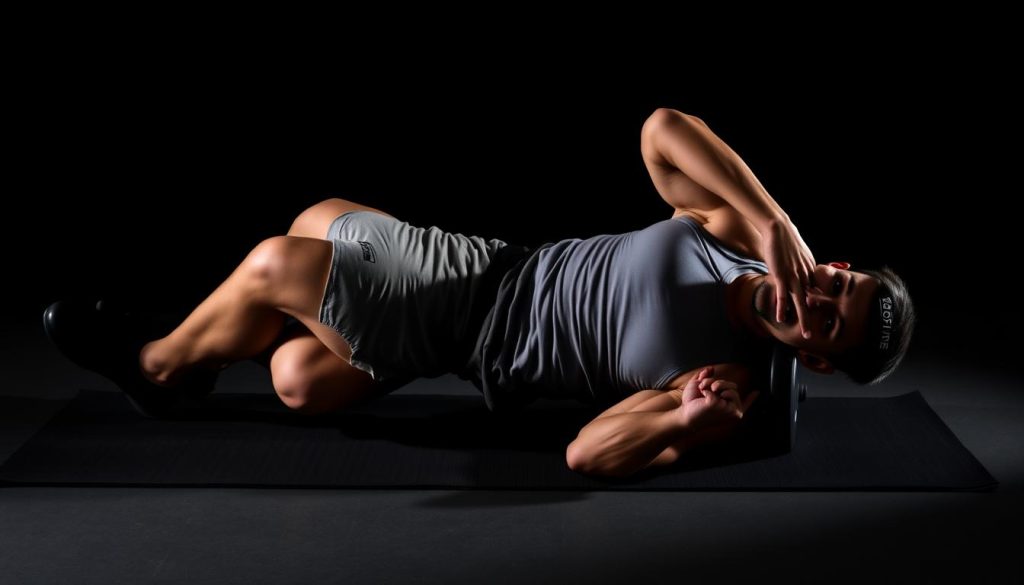
Weighted Leg Raises are another effective exercise for the lower abs. Lie on a flat bench or floor and hold a dumbbell between your feet. Lift your legs straight up towards the ceiling, keeping them straight, and then lower them back down. It’s crucial to maintain control throughout the movement and avoid arching your back. As you get stronger, you can increase the weight or reps to continue challenging your abs.
Kettlebell Exercises for Core Strength

Kettlebell exercises are a game-changer for core strength, offering a unique blend of strength, stability, and mobility in one movement. These exercises challenge your core muscles in multiple planes, improving overall body stability and strength.
Two effective kettlebell exercises for enhancing core strength are the Turkish Get-Up and the Half-Kneeling Windmill. These exercises not only target the core but also improve shoulder stability and hip mobility.
Turkish Get-Up
The Turkish Get-Up is a complex exercise that requires coordination and core stability. It involves moving from a lying position to standing while holding a kettlebell overhead, emphasizing shoulder strength and control.
To perform the Turkish Get-Up, start by lying on your back with the kettlebell held in one hand. Progress through the movement, keeping your core engaged and your glutes activated, to stand up while maintaining control over the kettlebell.
Half-Kneeling Windmill
The Half-Kneeling Windmill is another effective kettlebell exercise that targets the core while improving hip mobility and shoulder stability. This exercise involves holding a kettlebell in one hand and performing a windmill motion with your body in a half-kneeling stance.
To execute the Half-Kneeling Windmill correctly, maintain a tight core and keep your eyes on the kettlebell throughout the movement. This ensures proper alignment and maximizes the effectiveness of the exercise.
Plank Variations with Added Resistance
Incorporating added resistance into plank exercises can dramatically enhance their effectiveness for building core strength. By adding weight or resistance to traditional plank exercises, you can challenge your core muscles in new ways, promoting greater strength and stability.
Weighted Plank
The weighted plank is a straightforward way to add resistance to your core workout. To perform this exercise, start in a standard plank position and have a training partner place a weight plate on your back, or wear a weighted vest. Focus on maintaining a rigid plank position, engaging your core and keeping your body in a straight line from head to heels.
Renegade Row
The renegade row combines a plank with a rowing motion, challenging your core’s anti-rotational strength. To perform this exercise, start in a plank position with your hands holding dumbbells. Row one arm up towards your side, keeping your core tight and preventing rotation. Lower the dumbbell and repeat with the opposite arm. This exercise not only targets your core but also engages your lats and improves overall strength.
To maximize the effectiveness of the renegade row, focus on proper hand placement and arm movement. Keep your arms straight and your shoulder stable as you row the dumbbell. Avoid letting your hips rotate or your lower back sag, maintaining a stable position throughout the exercise.
Ab Rollout Progressions

One of the most effective exercises for building core strength is the ab rollout. This exercise has gained a cult following due to its effectiveness in engaging the core muscles, as supported by EMG data. The ab wheel rollout capitalizes on the concept of eccentric strength-building, making it equally if not more effective than other core exercises like hanging leg raises and sit-ups.
Basic to Advanced Techniques
To perform the ab rollout correctly, start on your knees with your arms extended, holding the ab wheel. Maintain a neutral spine throughout the movement to avoid straining your back. As you roll out, your trunk must actively engage to maintain control. Begin with 3 sets of 8-12 reps, adjusting the distance based on your strength level.
As you progress, you can move from kneeling rollouts to standing variations, increasing the difficulty and engaging your core muscles more intensely.
Adding Weight to Increase Difficulty
To further challenge your core, you can add weight to your ab rollouts. This can be achieved by wearing a weighted vest or attaching a dumbbell to your body. Proper form is crucial when adding weight to avoid injury. Ensure that you’re maintaining control throughout the entire range of motion.
Creating an Effective Weighted Ab Workout Routine
A well-designed weighted ab workout routine is crucial for overall core development. To achieve a strong and toned midsection, it’s essential to balance different types of core exercises that target various muscle groups.
When structuring your workout, consider the following key elements: exercise variety, intensity, and recovery time. A well-rounded routine should include a mix of dynamic movements and isometric exercises like plank variations.
Sample Beginner Workout
For beginners, start with a simple yet effective routine that includes:
- Weighted crunches: 3 sets of 12-15 reps
- Weighted leg raises: 3 sets of 12-15 reps
- Plank position with dumbbell on the back: 3 sets of 30-60 seconds
This routine targets the abs and helps build foundational strength.
Intermediate Program
As you progress, you can incorporate more challenging exercises and increase the weight or reps. An intermediate routine might include:
- Weighted Russian twists: 3 sets of 15-20 reps per side
- Hanging leg raises with weight: 3 sets of 12-15 reps
- Cable crunch: 3 sets of 15-20 reps
Advanced Circuit
For advanced athletes, a circuit-style workout can be highly effective. Try combining:
- Weighted plank jacks: 3 sets of 30-60 seconds
- Kettlebell exercises like Turkish get-ups: 3 sets of 10-12 reps per side
- Weighted crunch on a decline bench: 3 sets of 15-20 reps
Recovery Tips
Remember, adequate recovery is crucial for muscle repair and growth. Ensure you’re giving your core muscles at least 48 hours of rest between intense training sessions.
Conclusion
The benefits of weighted ab exercises extend far beyond just aesthetics, improving overall core strength and stability. By incorporating these exercises into your workout routine, you’ll not only enhance your core muscles but also improve your overall performance in other exercises and daily activities.
Treating your abs like any other muscle group by applying progressive overload principles is crucial for building real core muscle and strength. It’s essential to focus on proper form and technique when performing weighted ab exercises to protect your lower back. A stronger core contributes to better posture and is key for significant lifts, making it a vital component of any comprehensive fitness regimen.
Visible abs are a combination of low body fat and well-developed core muscles, with weighted exercises addressing the muscle development side. Consistency and patience with core training are vital, as results take time but are well worth the effort. By incorporating a variety of weighted ab exercises, including dynamic movements like crunches and static holds like planks, into your workouts, you’ll achieve a balanced core development and enhance your overall fitness.
Start by gradually integrating these exercises into your existing workout routine for sustainable progress and a stronger, more resilient core.